A long novel demands commitment from its readers, a promise you'll stay the distance whatever the ups and downs along the way. The Alexandria Quartet by Lawrence Durrell may be four-books-in-one, but at over 800 pages of densely written prose, it clearly falls into the lengthy category. It was gathering dust on my bedside pile, passed over for slimmer, less demanding volumes, until I pounced on it as the perfect tome for a two week getaway last month.
Each book in the quartet is named after one of the main protagonists; Justine, Balthazar, Mountolive and Clea. Set in Alexandria in the years leading up to the Second World War, it opens with a vividly drawn description of a heady and hedonistic city teeming with different nationalities. Durrell, writing as an insider and resident of Alexandria at this time, breathes life into the details of every quarter, street and alleyway he describes.
Justine has the shape of a love story as the narrator, only later identified as L.G.Darnley, is drawn into her world of glamour, deceit and despair. We find out little about his background, only that he's come to Alexandria as a writer, quickly becoming involved with the timorous sometime-dancer Melissa. The beautiful and seductive Justine is way out of his league, already married to wealthy Coptic businessman Nessim, but when did that ever stop a man from embarking on a doomed-to-disaster love affair? At first the story is fragmented as Darnley, writing from a distant island some time after the event, seeks to make sense of what has happened and to find a form for his novel.
There are huge drifts of description and I must admit I struggled at times to get to grips with the narrative. If I hadn't been on holiday, with time to concentrate while sipping a glass of prosecco on my sun lounger, I might have been tempted to give up. There just seemed to be an excess of words to deal with, many of them too obscure unless you have a dictionary handy. Nevertheless it was the writing which finally got hold of me towards the close of Justine, both the poetry of Durrell's language and the feeling of being absorbed into a richly textured, multi-faceted place and time far away from modern European sensibilities. A place contrasting opulence and extreme poverty, chastity and complete deprivation; a boiling mass of emotion rather than intellect where philosophical arguments are nevertheless coolly examined and dissected.
The second book weaves a layer of gossamer over the first, covering some of its gaps by means of an 'interlinear' provided by Balthazar, a doctor, interpreter of the Cabal and confidante of Justine's. Here we learn all is not what it seems, that many of the protagonists have previously unsuspected motives for their actions and there's much more at the heart of this hugely-scoped quartet than a simple love story. Mountolive, the only book written in the third person, reinforces this and throws light on yet more characters from the perspective of the British ambassador. It's only in Clea, the final instalment, that the story moves on as Darnley is drawn back into the lives of those he left behind in an Alexandria now ravaged by war, to find how much they too have changed.
The four books, although all written from different perspectives and initially published separately between 1957-60, have many recurring themes and motifs in common. I can't imagine reading any one in isolation, the whole is so much greater than the sum of its parts, the reworking of events becoming the stuff of life itself. I was still reading Clea after I got back from holiday, but by that time there was no problem in getting to the end because I was hooked. The fate of many of the characters has stayed with me and it's one of those novels that - despite its length - you want to reread immediately to see what clues you missed first time round. As commitments go book-wise, The Alexandria Quartet is a big one, but like all the best relationships its impact is long-lasting, profound and deeply rewarding.
Tuesday, 17 September 2013
Saturday, 7 September 2013
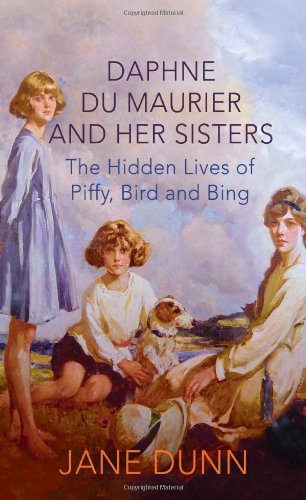
Daphne du Maurier and Her Sisters by Jane Dunn
Last weekend my family and I made our annual pilgrimage to one of our favourite places, the idyllic Cornish town of Fowey, a location beloved of the du Maurier clan who still own a house on the riverbank at Bodinnick.
Which reminded me I was seriously tardy with my review of Daphne du Maurier and Her Sisters The Hidden Lives of Piffy, Bird and Bing by Jane Dunn, an accomplished biographer who lives near me in Bath.
Jane has a particular interest in families and their influence on the lives and works of her subjects
As in the nursery, so in the life of a family which created its own language and childhood nicknames. Daphne (known as Bing) took the leading role as her father's favourite, the one who had the looks, the talent and eventually the husband, children, money and fame as well. She lived increasingly in the world of an imagination more vivid to her than real life, often developing crushes on people as she perceived them rather than as they really were, using them as 'pegs' on which to hang the characters in her writing.
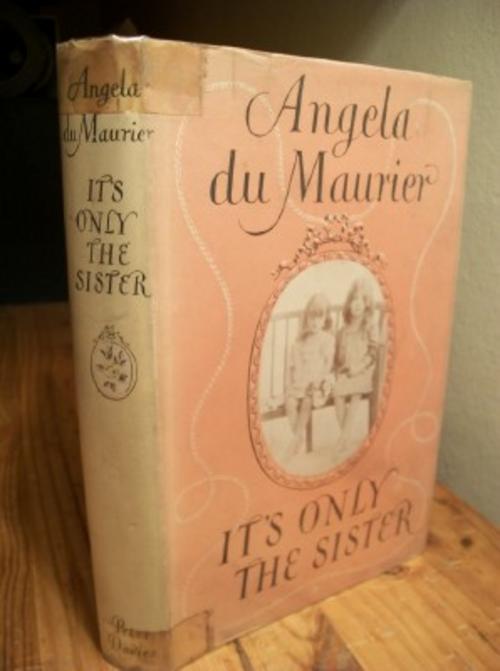
Angela (Piffy), considered plain from a birth in a family that valued beauty, lacked belief that she could really achieve anything of her own and fell easily in and out of love, firstly with men and then more often with women. She tried singing and acting before turning to writing and had several books published, but never emulated Daphne's success, leading her to entitle her biography 'It's Only The Sister'.
But, at a time when Daphne was being faced with the unwelcome realities of life as an army Major's wife, Angela's world opened up as she became involved with a group of liberated women in Hampstead, including the actress Marda Vanne and writer Dodie Smith. Jane's writing gives us a fascinating insight into the life which could be lived by women outside the conventions of marriage and domesticity in the 1930s, if, of course, they had the means to support themselves. Once her father died, the grip of his Victorian values was loosened and Angela had a series of relationships with women frequently much older than herself.
Jeanne (Bird), the youngest, was favourite of her mother Muriel, a pretty child who became a painter, trained at the Central School of Arts and Crafts and increasingly involved in the artistic life of Cornwall. Of the three sisters, Jeanne's voice is mostly absent because, in writing this book, Jane was denied access to her letters by Jeanne's lifelong partner the poet Noel Welch. Like their mother Muriel, she often doesn't seem to have a presence of her own but is glimpsed in the writings and reactions of others.
This biography is richly illustrated with photographs from the du Maurier family album which track their lives as they grow with the century through the opulence of the twenties to the deprivations of war and beyond. As Jane explains in her preface, she doesn't seek to write a full biography of each sister, rather to consider them side by side as they lived in life. But this is a difficult balance to achieve and inevitably Daphne emerges as the fascinating but flawed leading character in this book. She often appears unlikable and cold in her relationships, yet is generous to a fault with her wealth in supporting family and friends, has written more than her siblings and had so much more written about her.
And, although the whole family fell in love with Fowey and lived there for many years, it was Daphne alone who became obsessed with nearby Menabilly, the run-down country house which provided inspiration for Manderley in Rebecca, her bestselling novel which became a chilling Hitchcock film.
It's fascinating to examine Daphne's character and work not only in the context of her two sisters but also her parents and the wider du Maurier clan. Although Jane does succeed in bringing Angela and to some extent Jeanne to life, it's through the prism of Daphne that this engaging, highly readable and thoroughly researched biography is at its most successful.
Images courtesy of the National Portrait Gallery, Getty Images and the BBC
![]() |
| A view of Fowey with the du Maurier house Ferryside on the left |
Which reminded me I was seriously tardy with my review of Daphne du Maurier and Her Sisters The Hidden Lives of Piffy, Bird and Bing by Jane Dunn, an accomplished biographer who lives near me in Bath.
Jane has a particular interest in families and their influence on the lives and works of her subjects
families are the soil out of which character grows and there is no richer compost than the relationship of sisters
Previously she's examined the sibling bond between Virginia Woolf and Vanessa Bell and here she focuses on the writer Daphne du Maurier and her less well known sisters Angela and Jeanne.
![]() |
| (l to r) Angela, Jeanne, their mother Muriel and Daphne |
Even before the eldest sister Angela was born, the du Mauriers were celebrities in Edwardian society; their father Gerald was renowned as the actor who made the role of Captain Hook in Peter Pan his own. J.M.Barrie was a family friend and the girls were taken every year to see the play performed at Wyndhams's theatre.
![]() |
| Gerald as Captain Hook |
Throughout their childhood the sisters would re-enact the play in their nursery, the words and ideas becoming engraved deep into their psyches. Daphne was always Peter; Angela was more than happy to play Wendy, while Jeanne filled in with whatever part Daphne assigned her.
![]() |
| Daphne |
![]() |
| Angela |
![]() |
| Angela's biography |
![]() |
| Jeanne (l) with Daphne |
![]() |
| One of Jeanne's paintings |
This biography is richly illustrated with photographs from the du Maurier family album which track their lives as they grow with the century through the opulence of the twenties to the deprivations of war and beyond. As Jane explains in her preface, she doesn't seek to write a full biography of each sister, rather to consider them side by side as they lived in life. But this is a difficult balance to achieve and inevitably Daphne emerges as the fascinating but flawed leading character in this book. She often appears unlikable and cold in her relationships, yet is generous to a fault with her wealth in supporting family and friends, has written more than her siblings and had so much more written about her.
![]() |
| Daphne and her children at Menabilly |
And, although the whole family fell in love with Fowey and lived there for many years, it was Daphne alone who became obsessed with nearby Menabilly, the run-down country house which provided inspiration for Manderley in Rebecca, her bestselling novel which became a chilling Hitchcock film.
It's fascinating to examine Daphne's character and work not only in the context of her two sisters but also her parents and the wider du Maurier clan. Although Jane does succeed in bringing Angela and to some extent Jeanne to life, it's through the prism of Daphne that this engaging, highly readable and thoroughly researched biography is at its most successful.
Images courtesy of the National Portrait Gallery, Getty Images and the BBC
Tuesday, 27 August 2013
Guest Blog:The Curious Incident of the Dog in the Night-Time (Take Two)
I've been considering inviting a guest on my blog for a while and when Livvy came back from London having seen 'The Curious Incident of the Dog in the Night-Time' for the second time this year, I wanted to know why she found it so compelling. She is my daughter, by the way, and a drama student, you can find her on twitter @livvy_leigh. So here (drum roll) are her thoughts...
Then there’s the set. Organised like a magnificent grid complete with co-ordinates, Bunny Christie’s design is a delightful manifestation of Christopher’s ordered and mathematical world. Props emerge from the floor and several cupboards are disguised in the walls of the set, contributing to a very exciting and intense routine in which Christopher builds a mammoth train-track near the end of the first act. Settings are created through the simple use of lighting and wooden boxes (as well as members of the ensemble!), and projections appear on the walls which make the performance very immersive. At one point the dimensions of the set even change - the stage’s back wall surging forwards - and this really effectively displays how unstable the world is for Christopher.
The Curious Incident
of the Dog in the Night-Time – Theatre in its Prime
Having won seven Olivier Awards, reams of four and five-star
reviews and countless other accolades, Simon Stephens’ and Marianne Elliott’s
staggering stage translation of Mark Haddon’s 2003 novel ‘The Curious Incident
of the Dog in the Night-Time’ at the Apollo certainly lives up to and beyond the
hype. In what is a very true adaptation of Haddon’s novel, the audience are
introduced to the complex, comic and at times very difficult world of
Christopher Boone (Luke Treadaway/Johnny Gibbon), a 15-year old boy with
‘behavioural problems’ consistent with Asperger’s syndrome. Detached from the
‘confusing’ people around him, Christopher enjoys maths, outer space and being
on his own. His world revolves around logic and reasoning, and he is unable to
understand jokes or metaphors. In what is a hugely enjoyable production in
terms of both its creative staging and first-rate acting, the protagonist
attempts to uncover the mystery of the murder of his neighbour’s dog,
inadvertently embarking on a journey which in turn reveals a number of truths a
lot closer to home.
The joy of this play is that we gain an insight into Christopher’s very private world; his eccentricities and the workings of his astonishing mind. Stephens overcomes the difficulties presented by the fact that the story is told entirely by Christopher using the character of Siobhan (Niamh Cusack), his teacher, as the main narrator of a book he is writing for a school project. This divorce of story-telling from the action is instrumental in creating moments of both comedy and immense tension – particularly when Christopher discovers a box of hidden letters in his father’s bedroom. This device allows Treadaway to inhabit the protagonist with an incredible and perfect intensity, as well as creating fantastically comic moments delivered by peripheral characters.
The physicality of the entire performance is awe-inspiring. Choreographed by Frantic Assembly, the ensemble performs incredibly fast-paced and demanding routines, most memorably when Christopher has to tackle a bustling Paddington and the tube. Here he is spun, held vertically as he walks across the sidewall and flipped several times by busy and expressionless London commuters. The movement devised is a perfect visual allegory for the intrusive and overwhelming sensory environment Christopher finds himself in, not only as someone on the autistic spectrum but as a young boy in an alien location too. Back home in Swindon, the most physical contact Christopher can tolerate is meeting his palm with his father’s, so the contrast in physicality between these two locations really does reinforce the assault on his senses that he suffers in London. Life is horribly messy, Christopher discovers, and the portrayal of the capital city exemplifies this.
The joy of this play is that we gain an insight into Christopher’s very private world; his eccentricities and the workings of his astonishing mind. Stephens overcomes the difficulties presented by the fact that the story is told entirely by Christopher using the character of Siobhan (Niamh Cusack), his teacher, as the main narrator of a book he is writing for a school project. This divorce of story-telling from the action is instrumental in creating moments of both comedy and immense tension – particularly when Christopher discovers a box of hidden letters in his father’s bedroom. This device allows Treadaway to inhabit the protagonist with an incredible and perfect intensity, as well as creating fantastically comic moments delivered by peripheral characters.
The physicality of the entire performance is awe-inspiring. Choreographed by Frantic Assembly, the ensemble performs incredibly fast-paced and demanding routines, most memorably when Christopher has to tackle a bustling Paddington and the tube. Here he is spun, held vertically as he walks across the sidewall and flipped several times by busy and expressionless London commuters. The movement devised is a perfect visual allegory for the intrusive and overwhelming sensory environment Christopher finds himself in, not only as someone on the autistic spectrum but as a young boy in an alien location too. Back home in Swindon, the most physical contact Christopher can tolerate is meeting his palm with his father’s, so the contrast in physicality between these two locations really does reinforce the assault on his senses that he suffers in London. Life is horribly messy, Christopher discovers, and the portrayal of the capital city exemplifies this.
Then there’s the set. Organised like a magnificent grid complete with co-ordinates, Bunny Christie’s design is a delightful manifestation of Christopher’s ordered and mathematical world. Props emerge from the floor and several cupboards are disguised in the walls of the set, contributing to a very exciting and intense routine in which Christopher builds a mammoth train-track near the end of the first act. Settings are created through the simple use of lighting and wooden boxes (as well as members of the ensemble!), and projections appear on the walls which make the performance very immersive. At one point the dimensions of the set even change - the stage’s back wall surging forwards - and this really effectively displays how unstable the world is for Christopher.
There’s no
weak link in any of the cast’s performances – each role is acted with a
faultless and entirely believable intensity. Sean Gleeson and Holly Aird’s
performances as struggling parents Ed and Judy are fantastic and very true –
they are not saint-like; they are flawed and at points just as confused about
everything as Christopher. Judy’s desperation really is heart-wrenching,
although her monologues are extremely lengthy. Tilly Tremayne’s comic timing as
the elderly and benevolent Mrs Alexander is spot-on, especially when she
informs Christopher of his mother’s affair with Mr Shears. And then there’s
Luke Treadaway. It’s rare to come away from a play unable to imagine what an
actor is like outside of the role they are in, but Treadaway is so entirely
convincing from his unique intonation of speech and repetition of prime numbers
to his constant fiddling of his hoodie-strings that he really does achieve
this. He times comic moments perfectly, especially when Christopher
inadvertently mimics those around him. His manic assembling of the train-tracks
and the ‘episode’ which follows are remarkably powerful and breathtaking to
watch. You don’t need me to tell you this, but his performance is one entirely
deserving of its Olivier award.
Not to be overlooked is Johnny Gibbon’s outstanding performance as the alternate lead. He too is utterly convincing as the 15 year-old Christopher and tackles the role, which is hugely physically and emotionally demanding, like a seasoned professional despite it being his west-end debut and is thoroughly deserving of high acclaim for his performance.
This adaptation of Haddon’s break-through book is a triumph and one which should appeal to everyone – because really this play isn’t just about a boy on the autistic spectrum. Stephens’ writing and Elliott’s direction emphasise that it’s about anyone who has experienced difference and difficulty; our individual eccentricities and how we overcome the problems that life, confusing at the best of times, presents us with.
Not to be overlooked is Johnny Gibbon’s outstanding performance as the alternate lead. He too is utterly convincing as the 15 year-old Christopher and tackles the role, which is hugely physically and emotionally demanding, like a seasoned professional despite it being his west-end debut and is thoroughly deserving of high acclaim for his performance.
This adaptation of Haddon’s break-through book is a triumph and one which should appeal to everyone – because really this play isn’t just about a boy on the autistic spectrum. Stephens’ writing and Elliott’s direction emphasise that it’s about anyone who has experienced difference and difficulty; our individual eccentricities and how we overcome the problems that life, confusing at the best of times, presents us with.
PS. Listen to Siobhan and stay after the curtain-call!
The original Olivier
award-winning west-end cast have less than a week of performances left. 150 £12 tickets are available on the day from
10 am at the box office and with a full house almost every night this is your
best chance of seeing them before they finish. The new run commences on 2nd
September with Mike Noble leading the promising new cast.
Pictures taken from www.curiousonstage.com by Brinkhoff/Mögenburg and Johnny Gibbon
Monday, 26 August 2013
The Way, Way Back (12A) - review
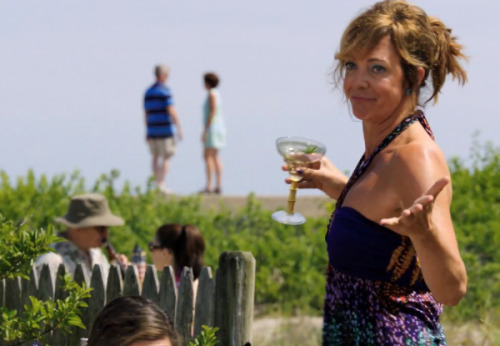
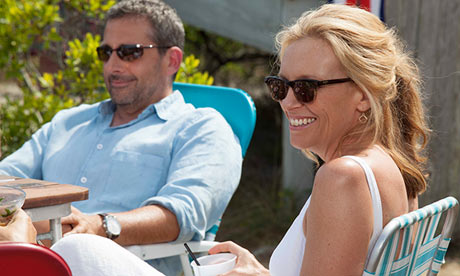
The Way, Way Back opens with a car journey, as fourteen year old Duncan (Liam James) and his mom Pam (Toni Collette) travel with her new boyfriend Trent (Steve Carell) and his daughter to Trent's holiday home in Massachusetts. As the other passengers doze, Trent looks into his rear view mirror and asks Duncan how he rates himself on a scale of one to ten. Duncan is physically and mentally isolated at the other end of the station wagon and his mumbled reply, together with Trent's belligerent response (based on a conversation which one of the film's writer/directors Jim Rash actually had with his own step-father), sets the tone eloquently for turbulence ahead. Duncan is gauche and introverted and Pam, though concerned for the welfare of her son, places far greater emphasis on the importance of her new relationship with Trent.
This has the makings of a holiday from hell for Duncan, complete with the dysfunctional family next door, comprising hard drinking divorcee Betty (Allison Janney who really gets her teeth into this role) and her teenage children, plus a circle of other emotionally baggage-laden neighbours who've been holidaying in the same spot for years.
Things are looking grim until Duncan discovers a bike in Trent's garage and uses it to explore his surroundings, chancing upon the Water Wizz water park. Here he meets up with Owen (Sam Rockwell) who runs the park and his motley band of employees, a haphazard crew who nevertheless provide a far more nurturing environment than Duncan finds at home.
Trent perceives Duncan not so much as a child but as a rival for Pam's affection, leaving it for Owen to step in and fill the paternal void. As the adults in his family descend into a feckless abandonment of responsibility, a desperate last chance grasping of happiness, Duncan begins to accept responsibility for his life at the water park and develops a disarmingly hesitant relationship with the girl-next-door Susanna (AnnaSophia Robb).
Like its predecessor Little Miss Sunshine, The Way, Way Back was applauded on its debut at the Sundance Film Festival and is distributed by Fox Searchlight pictures. Although more upbeat and less anarchic, the film's tone and themes, revolving around uprooted and fractured family life, are achingly familiar to Little Miss Sunshine devotees. Duncan's character reprises much of Dwayne's gradual and often painful emergence from the adolescent chrysalis and Carell and Collette are present once again, this time cast as lovers rather than siblings. For all its tensions and bittersweet poignancy, The Way, Way Back is peppered with amusing moments, particularly any scene involving Sam Rockwell or Allison Janney.
Steve Carell was so important to the writing/directing team Jim Rash and Nat Faxon (who appear as two members of staff at Water Wizz) that they moved location to be nearer to him and it's good to see him taking on a darker role. Toni Collette is as reliable a central character as ever, although this is hardly a stretch for her she's still a joy to watch. And, as the children often display far greater maturity than the adults, Liam Parker portrays Duncan with great authenticity, so much so that you cannot help reaching out to him in his excruciating awkwardness and applauding his initiative to relocate his heart.
Like all good narratives, we end as we began in the car, but this time there's a difference. For all it's familiar themes, The Way Way Back is funny, tender, engaging and hopeful - a film I'll happily be watching again.
I saw The Way, Way Back at the The Little Theatre Cinema, Bath, it opens in cinemas on August 28th 2013
All pictures courtesy of Fox Searchlight
This has the makings of a holiday from hell for Duncan, complete with the dysfunctional family next door, comprising hard drinking divorcee Betty (Allison Janney who really gets her teeth into this role) and her teenage children, plus a circle of other emotionally baggage-laden neighbours who've been holidaying in the same spot for years.
Things are looking grim until Duncan discovers a bike in Trent's garage and uses it to explore his surroundings, chancing upon the Water Wizz water park. Here he meets up with Owen (Sam Rockwell) who runs the park and his motley band of employees, a haphazard crew who nevertheless provide a far more nurturing environment than Duncan finds at home.
Trent perceives Duncan not so much as a child but as a rival for Pam's affection, leaving it for Owen to step in and fill the paternal void. As the adults in his family descend into a feckless abandonment of responsibility, a desperate last chance grasping of happiness, Duncan begins to accept responsibility for his life at the water park and develops a disarmingly hesitant relationship with the girl-next-door Susanna (AnnaSophia Robb).
Like its predecessor Little Miss Sunshine, The Way, Way Back was applauded on its debut at the Sundance Film Festival and is distributed by Fox Searchlight pictures. Although more upbeat and less anarchic, the film's tone and themes, revolving around uprooted and fractured family life, are achingly familiar to Little Miss Sunshine devotees. Duncan's character reprises much of Dwayne's gradual and often painful emergence from the adolescent chrysalis and Carell and Collette are present once again, this time cast as lovers rather than siblings. For all its tensions and bittersweet poignancy, The Way, Way Back is peppered with amusing moments, particularly any scene involving Sam Rockwell or Allison Janney.
Steve Carell was so important to the writing/directing team Jim Rash and Nat Faxon (who appear as two members of staff at Water Wizz) that they moved location to be nearer to him and it's good to see him taking on a darker role. Toni Collette is as reliable a central character as ever, although this is hardly a stretch for her she's still a joy to watch. And, as the children often display far greater maturity than the adults, Liam Parker portrays Duncan with great authenticity, so much so that you cannot help reaching out to him in his excruciating awkwardness and applauding his initiative to relocate his heart.
Like all good narratives, we end as we began in the car, but this time there's a difference. For all it's familiar themes, The Way Way Back is funny, tender, engaging and hopeful - a film I'll happily be watching again.
I saw The Way, Way Back at the The Little Theatre Cinema, Bath, it opens in cinemas on August 28th 2013
All pictures courtesy of Fox Searchlight
Tuesday, 20 August 2013
Fences at the Duchess Theatre - do believe the hype
So much praise has been heaped on Lenny Henry during his transformation from comic to serious actor, but despite the accolades I've been curiously reluctant to watch him in his new guise. To me, Lenny is Theophilus P Wildebeeste, one of a host of funny, wild-eyed and overblown caricatures. So I feared not only could this reincarnation be a bit of a gimmick, but also his larger-than-life presence would overshadow his character and distract from the rest of the play.
Fences by August Wilson is a departure from Lenny's previous dramatic outings in Shakespeare, the story of Troy Maxson, a black garbage collector in Pittsburgh and gifted baseball player who could have made it in the major league if not for his colour and the deprivation of his background. Instead, Troy has bought a house with the proceeds of a payout to his younger brother Gabriel who was injured in the war, and is settled there with his wife Rose and son Cory. As the play opens he arrives home with his best friend Jim Bono, drinking on the veranda as Rose busies herself with their dinner.
Despite the initial high spirits of a Friday night, Troy emerges as a troubled character, burdened by the responsibilities of raising a family and keeping a roof over their heads, discriminated against at work and frightened at the prospect of death. It appears at first he has a lovingly physical relationship with Rose, but all is not as it seems. What is clear from the beginning, however, is that Troy has difficulty in accepting his children's choices, in particular resenting his younger son Cory's talent as a football player and chance of a college scholarship. Nothing came of Troy's sporting talent and he's certain his son is wasting his time too, angered by Cory's lack of focus on work and chores, which include helping to finish the fence being erected around the Maxson property.
August Wilson's ten Pittsburgh plays are each part of a cycle relating to a different decade of the 20th century. Fences is set in the 1950s, an era still dominated by racial segregation and although it was written in the 1980s, when some of the worst excesses of discrimination had arguably been dismantled, many audiences might still have lacked understanding that a black garbage collector could have an interior life. The play, with it's undertones of Arthur Miller or Tennessee Williams, was a great success, winning a Pulitzer Prize when performed on Broadway with James Earle Jones in the role of Troy. A 2010 revival starred Denzel Washington, large shoes indeed for Lenny Henry to fill in this Theatre Royal Bath production of a very American play.
Fortunately Lenny has big feet, as fill those shoes he does in a riveting and measured performance which encompasses all the light and shade of one man's torment. After the first couple of minutes, I completely forgot I was watching anybody but Troy Maxson, a man with plenty to say. As he veers from exuberant banter to challenging the Grim Reaper to moments of naked and painful revelation, Lenny is more than equal to the task of portraying a big man often brought low, a self-reliant survivor who is often harsh with his family and justifies his own weaknesses without any recognition of the loyalty he's accepted as his right. And so he builds a fence, slowly and haphazardly, to keep his family in or to keep the world away.
There are lighter moments but with so much raw emotion, it's not unexpected that this play is sometimes unbalanced and so central is Troy that it can drag when he's not commanding the stage. But there are other very solid performances too, most notably Tanya Moodie as Rose and Colin McFarlane as Jim Bono. Libby Watson's set is enchanting, allowing glimpses of characters approaching on the path or busy around the house, although this is occasionally distracting - as when Rose took so long to peel a couple of apples that I became entirely fixated on her pie at the expense of the narrative. And the ending too is protracted, one which I rehearsed several times in my mind before it eventually arrived. But without doubt, this is a hugely enjoyable and moving production, one for which Lenny Henry, no longer the comic but a serious actor in a leading role, deserves every second of his solo bow.
Fences opened at the Theatre Royal Bath on 20th February 2013 and is currently at the Duchess Theatre in London.
Fences by August Wilson is a departure from Lenny's previous dramatic outings in Shakespeare, the story of Troy Maxson, a black garbage collector in Pittsburgh and gifted baseball player who could have made it in the major league if not for his colour and the deprivation of his background. Instead, Troy has bought a house with the proceeds of a payout to his younger brother Gabriel who was injured in the war, and is settled there with his wife Rose and son Cory. As the play opens he arrives home with his best friend Jim Bono, drinking on the veranda as Rose busies herself with their dinner.
Despite the initial high spirits of a Friday night, Troy emerges as a troubled character, burdened by the responsibilities of raising a family and keeping a roof over their heads, discriminated against at work and frightened at the prospect of death. It appears at first he has a lovingly physical relationship with Rose, but all is not as it seems. What is clear from the beginning, however, is that Troy has difficulty in accepting his children's choices, in particular resenting his younger son Cory's talent as a football player and chance of a college scholarship. Nothing came of Troy's sporting talent and he's certain his son is wasting his time too, angered by Cory's lack of focus on work and chores, which include helping to finish the fence being erected around the Maxson property.
August Wilson's ten Pittsburgh plays are each part of a cycle relating to a different decade of the 20th century. Fences is set in the 1950s, an era still dominated by racial segregation and although it was written in the 1980s, when some of the worst excesses of discrimination had arguably been dismantled, many audiences might still have lacked understanding that a black garbage collector could have an interior life. The play, with it's undertones of Arthur Miller or Tennessee Williams, was a great success, winning a Pulitzer Prize when performed on Broadway with James Earle Jones in the role of Troy. A 2010 revival starred Denzel Washington, large shoes indeed for Lenny Henry to fill in this Theatre Royal Bath production of a very American play.
Fortunately Lenny has big feet, as fill those shoes he does in a riveting and measured performance which encompasses all the light and shade of one man's torment. After the first couple of minutes, I completely forgot I was watching anybody but Troy Maxson, a man with plenty to say. As he veers from exuberant banter to challenging the Grim Reaper to moments of naked and painful revelation, Lenny is more than equal to the task of portraying a big man often brought low, a self-reliant survivor who is often harsh with his family and justifies his own weaknesses without any recognition of the loyalty he's accepted as his right. And so he builds a fence, slowly and haphazardly, to keep his family in or to keep the world away.
There are lighter moments but with so much raw emotion, it's not unexpected that this play is sometimes unbalanced and so central is Troy that it can drag when he's not commanding the stage. But there are other very solid performances too, most notably Tanya Moodie as Rose and Colin McFarlane as Jim Bono. Libby Watson's set is enchanting, allowing glimpses of characters approaching on the path or busy around the house, although this is occasionally distracting - as when Rose took so long to peel a couple of apples that I became entirely fixated on her pie at the expense of the narrative. And the ending too is protracted, one which I rehearsed several times in my mind before it eventually arrived. But without doubt, this is a hugely enjoyable and moving production, one for which Lenny Henry, no longer the comic but a serious actor in a leading role, deserves every second of his solo bow.
Fences opened at the Theatre Royal Bath on 20th February 2013 and is currently at the Duchess Theatre in London.
Monday, 12 August 2013
King Lear at the Theatre Royal, Bath
Any play directed by Lucy Bailey promises a bold creative vision and King Lear, part of the Theatre Royal Bath's 2013 summer season, is no exception. Shakespeare's epic tragedy of family betrayal opens in a typical 1960s London east end pub with chain-smoking sharp-suited gangsters and their thuggish skinhead lackeys. I haven't seen Lear performed before (another tick for my own pretty epic Shakespearean bucket list), so had no preconceived ideas to work with, but the scene was immediately set for an intriguing interpretation of a familiar, oft-told tale.
Old King Lear has decided to divide his kingdom between his three daughters, on condition that they each describe how much they love him. Goneril and Regan are fulsome and fluent in their praise and it's only Cordelia, his youngest, who hesitates to put her love into words. Lear flies into a rage and disinherits her, dividing what would have been Cordelia's land between her two siblings. Fortunately, one of Cordelia's suitors the King of France is still willing to marry her and they leave together. Lear soon discovers the false love of his two older daughters and pays dearly for his erroneous judgement. As Goneril and Regan conspire to deny him his courtiers and his remaining power, the King begins to lose his mind.
The sub plot meanwhile involves another family conflict between the Earl of Gloucester's illegitimate son Edmund and the legitimate Edgar. Edmund convinces his father that his heir is plotting against him and to save himself Edgar is forced on the run, disguising himself as a deranged and homeless beggar, Poor Tom.
David Haig is commanding as Lear, convincingly enraged by his daughters' behaviour, vulnerable and touchingly believable as he descends into madness and wanders adrift in a storm before eventually being rescued by Cordelia. Paul Shelley is also adept as Gloucester, the other father all too easily deceived by his treacherous offspring, blind to Edmund's faults and later blinded by a vicious attack from Regan's henchmen because of his decision to help Lear.
Edgar (William Postlethwaite) initially appears so innocently bumbling and bookish that it's difficult to believe his father would think he could do him any harm. Postlethwaite more than makes up for this though with Edgar's stunning transformation into Poor Tom, a nearly naked gutter philosopher smeared in grime.
Bailey's sixties gangland setting is an inspired choice for the turf wars and seething malevolence of this play with Lear, his family and retinue of courtiers dressed in the style of the Kray twins. Albany (Daniel Weyman) and Cornwall (Samuel Oatley) are threateningly mob-like and Samuel Edmund-Cook is sexily menacing as Edmund. The staging by William Dudley, incorporating images projected on to suspended gauze flats, is striking, particularly in the opening scene and later when Goneril deprives her father of his remaining power. If anyone it is Lear himself who is sometimes slightly at odds with this vision, the otherwise magnificent David Haig perhaps just a little too cuddly despite his sixties suit and slicked back hair. And while Goneril (Aislin McGuckin) and Reagan (Fiona Glascott) parade themselves somewhat two-dimensionally as brittle gangster molls, Cordelia (Fiona Button) is dressed as though she's on her way to an anachronistic S Club party, her difference over-telegraphed by sneakers, jeans and a snow-white top.
Lear wanders into the storm and the stripping away of the scenery emphasizes his increasing isolation. The play draws towards its powerful and bloody conclusion and it becomes more difficult to recognise the time frame because the violence of the thugs could belong to almost any era. This version of King Lear is not flawless and the opinions I have heard of it have been divided, but it reinforces the universal nature of Shakespeare's themes. In turn harrowing, shocking, funny and moving, this is an ambitious and memorable production from Lucy Bailey and the Theatre Royal Bath team.
Pictures courtesy of the Theatre Royal Bath. King Lear completed its run at the theatre on Saturday, 10th August 2013.
Old King Lear has decided to divide his kingdom between his three daughters, on condition that they each describe how much they love him. Goneril and Regan are fulsome and fluent in their praise and it's only Cordelia, his youngest, who hesitates to put her love into words. Lear flies into a rage and disinherits her, dividing what would have been Cordelia's land between her two siblings. Fortunately, one of Cordelia's suitors the King of France is still willing to marry her and they leave together. Lear soon discovers the false love of his two older daughters and pays dearly for his erroneous judgement. As Goneril and Regan conspire to deny him his courtiers and his remaining power, the King begins to lose his mind.
The sub plot meanwhile involves another family conflict between the Earl of Gloucester's illegitimate son Edmund and the legitimate Edgar. Edmund convinces his father that his heir is plotting against him and to save himself Edgar is forced on the run, disguising himself as a deranged and homeless beggar, Poor Tom.
David Haig is commanding as Lear, convincingly enraged by his daughters' behaviour, vulnerable and touchingly believable as he descends into madness and wanders adrift in a storm before eventually being rescued by Cordelia. Paul Shelley is also adept as Gloucester, the other father all too easily deceived by his treacherous offspring, blind to Edmund's faults and later blinded by a vicious attack from Regan's henchmen because of his decision to help Lear.
Edgar (William Postlethwaite) initially appears so innocently bumbling and bookish that it's difficult to believe his father would think he could do him any harm. Postlethwaite more than makes up for this though with Edgar's stunning transformation into Poor Tom, a nearly naked gutter philosopher smeared in grime.
Bailey's sixties gangland setting is an inspired choice for the turf wars and seething malevolence of this play with Lear, his family and retinue of courtiers dressed in the style of the Kray twins. Albany (Daniel Weyman) and Cornwall (Samuel Oatley) are threateningly mob-like and Samuel Edmund-Cook is sexily menacing as Edmund. The staging by William Dudley, incorporating images projected on to suspended gauze flats, is striking, particularly in the opening scene and later when Goneril deprives her father of his remaining power. If anyone it is Lear himself who is sometimes slightly at odds with this vision, the otherwise magnificent David Haig perhaps just a little too cuddly despite his sixties suit and slicked back hair. And while Goneril (Aislin McGuckin) and Reagan (Fiona Glascott) parade themselves somewhat two-dimensionally as brittle gangster molls, Cordelia (Fiona Button) is dressed as though she's on her way to an anachronistic S Club party, her difference over-telegraphed by sneakers, jeans and a snow-white top.
Lear wanders into the storm and the stripping away of the scenery emphasizes his increasing isolation. The play draws towards its powerful and bloody conclusion and it becomes more difficult to recognise the time frame because the violence of the thugs could belong to almost any era. This version of King Lear is not flawless and the opinions I have heard of it have been divided, but it reinforces the universal nature of Shakespeare's themes. In turn harrowing, shocking, funny and moving, this is an ambitious and memorable production from Lucy Bailey and the Theatre Royal Bath team.
Pictures courtesy of the Theatre Royal Bath. King Lear completed its run at the theatre on Saturday, 10th August 2013.
Monday, 1 July 2013
May We Be Forgiven by A.M.Homes
A.M.Homes' latest novel May We Be Forgiven is difficult to categorize, which is one big brownie point in its favour as far as I'm concerned (don't you hate it when the whole narrative is already neatly summarised on the back of a book, with no space for your own interpretation?) The story begins with Harry attending Thanksgiving at the house of his younger brother George, a successful TV executive who presides over a table of superficial power cronies while his wife Jane and their children subsist around the periphery.
But then there's a seismic shift in family dynamics as Jane kisses Harry over the cleared-away turkey carcass, with unforeseen repercussions rebounding all over the place. Harry is an under-achieving Nixon scholar trapped in a sterile marriage and thankless professorship, so in many ways it seems he doesn't have too much to lose by embarking on an affair with his brother's wife. In reality of course, he must lose himself, bottoming out in a pit of emotional despair as his relationships, career and health all deteriorate, to find himself once more as he steps tentatively into his out-of-control brother's shoes. And as he does so, he realises his previously alienated nephew and niece, Nate and Ashley, not to mention his brother's dog and cat and house, are a lot more engaging than he thought.
The story begins with a car crash and a murder and then the pace really begins to quicken. This is a darkly comic feverish brain dump of a narrative, set in Westchester and with New York frenzy written all over it, bombarding you at every opportunity with new characters and events. It's certainly a page-turner that makes for an exhilarating ride, but I often found myself wishing a strand like the girl who goes missing or Ashley's affair with a teacher at her school could be developed in more detail before being cast aside for the next big idea that comes hurtling along. As it is, there are so many passing characters and sub-plots, some more successful than others, that the narrative can become confusing. And for some reason I often forgot this was supposed to be a man narrating the story and repeatedly read Harry as a woman - perhaps that's just me or is he quite in touch with his feminine side?
Despite his health problems, Harry finds himself able to indulge in a lot of easily available sex without too much of a problem, much of it amusing, some of it unexpectedly thought-provoking. And I did enjoy his family relationships - first and foremost his volatile and frequently violent relationship with George, but also with his mother who goes through an almost Lazarus-like reincarnation, as well as Nate, Ashley and various other assorted relatives.The whole Nixon thing didn't do too much for me, but I can appreciate it's a great deal more relevant if you're an American citizen. Likewise the South African adventure, cosseted Americans rediscovering the meaning of life as their material comforts are stripped away, was rather cliched and an unnecessary continent too far.
We now know that A.M.Homes is the winner of this year's Women's Prize for Fiction with this book and I'm sure I wasn't the only one to be a little surprised when the result was announced. Reading it felt a lot like lifting a large plant pot that hasn't been moved for a while, to discover a seething microcosm of life underneath. Some things you find there are more interesting than others, some might be no more than a desiccated carapace, but it does makes for a pulsating, sometimes repulsive yet fascinating whole. Ultimately, I found this an uplifting story of one man's redemption through reconnecting with humanity - but don't let me tell you what to think, you need to read it for yourself.
But then there's a seismic shift in family dynamics as Jane kisses Harry over the cleared-away turkey carcass, with unforeseen repercussions rebounding all over the place. Harry is an under-achieving Nixon scholar trapped in a sterile marriage and thankless professorship, so in many ways it seems he doesn't have too much to lose by embarking on an affair with his brother's wife. In reality of course, he must lose himself, bottoming out in a pit of emotional despair as his relationships, career and health all deteriorate, to find himself once more as he steps tentatively into his out-of-control brother's shoes. And as he does so, he realises his previously alienated nephew and niece, Nate and Ashley, not to mention his brother's dog and cat and house, are a lot more engaging than he thought.
The story begins with a car crash and a murder and then the pace really begins to quicken. This is a darkly comic feverish brain dump of a narrative, set in Westchester and with New York frenzy written all over it, bombarding you at every opportunity with new characters and events. It's certainly a page-turner that makes for an exhilarating ride, but I often found myself wishing a strand like the girl who goes missing or Ashley's affair with a teacher at her school could be developed in more detail before being cast aside for the next big idea that comes hurtling along. As it is, there are so many passing characters and sub-plots, some more successful than others, that the narrative can become confusing. And for some reason I often forgot this was supposed to be a man narrating the story and repeatedly read Harry as a woman - perhaps that's just me or is he quite in touch with his feminine side?
Despite his health problems, Harry finds himself able to indulge in a lot of easily available sex without too much of a problem, much of it amusing, some of it unexpectedly thought-provoking. And I did enjoy his family relationships - first and foremost his volatile and frequently violent relationship with George, but also with his mother who goes through an almost Lazarus-like reincarnation, as well as Nate, Ashley and various other assorted relatives.The whole Nixon thing didn't do too much for me, but I can appreciate it's a great deal more relevant if you're an American citizen. Likewise the South African adventure, cosseted Americans rediscovering the meaning of life as their material comforts are stripped away, was rather cliched and an unnecessary continent too far.
We now know that A.M.Homes is the winner of this year's Women's Prize for Fiction with this book and I'm sure I wasn't the only one to be a little surprised when the result was announced. Reading it felt a lot like lifting a large plant pot that hasn't been moved for a while, to discover a seething microcosm of life underneath. Some things you find there are more interesting than others, some might be no more than a desiccated carapace, but it does makes for a pulsating, sometimes repulsive yet fascinating whole. Ultimately, I found this an uplifting story of one man's redemption through reconnecting with humanity - but don't let me tell you what to think, you need to read it for yourself.
Subscribe to:
Posts (Atom)