Showing posts with label Virago Press. Show all posts

Thursday, 28 February 2019

Book Review: In the Full Light of the Sun by Clare Clark

Ever since watching an incandescent Liza Minnelli play Sally Bowles in the 1972 film Cabaret, I've been fascinated by the cultural, economic and political maelstrom that was Berlin between the two World Wars. So I was instantly attracted to Clare Clark's new novel In the Full Light of the Sun, which evokes the glitter and decadence, hyperinflation and growing political extremism of the short-lived Weimar Republic.


Inspired by real-life events, Clark explores the turmoil wrought in the rarified 1920s German art establishment by the emergence of a cache of previously unknown paintings by Vincent van Gogh. Events unfold through the eyes of three diverse but interconnected Berliners: Julius, a celebrated art critic called upon to authenticate the paintings; Emmeline, a rebellious young artist who seeks his help to escape her overbearing mother and Frank, a Jewish lawyer caught up in the scandal over the paintings' origins, witnessing the rise of Nazism with mounting terror.

All three find their lives thrown into disarray by their involvement with the enigmatic art dealer Matthias Rachmann. Flattered by his deference, Julius becomes Matthias's mentor and friend, supporting his rapid rise in the art world and legitimising the van Goghs he sells from the collection of a mysterious Russian. Emmeline, capricious and gifted but struggling to support herself, becomes drawn into the web. And finally Frank, denied employment by a society that despises his existence and fearing for the safety of his family, stumbles across further secrets as he reviews the Rachmann case he previously defended in court.

Clark, with a background in historical novel writing, has meticulously researched her subject and brings the setting vividly to life. Her initial narrative from Julius's perspective is particularly well-drawn; she captures his sense of entitlement as a reputed establishment figure, his intimate appreciation of the beauty and perfection of art that transcends his flawed and friable relationship with his wife and young son. The myopic self-regard and vested interests of the art world are laid bare, for where do truth and value really lie? As authenticity is first confirmed and then denied, a painting worth a fortune one day, robbed of its provenance the next, can be instantly reduced to worthlessness.

At times, the changing perspectives affect the novel's cohesion and I found Emmeline's story to be more fractured, pinballing to different extremes as a reaction to her mother's narrow viewpoint. For all her artistic talent, Emmeline is, after all, just a young girl trying to figure out what it is she wants from life; existing on the fringes of respectability, she meets a struggling writer with a nose for a story and finds herself accused of fraud by virtue of her own prodigious talent.

Frank's section of the book is the only one to be written in the first person, a diary of the horrific persecution suffered by Berlin's Jews when the Nazis rose to power.  As modern-day readers, we appreciate the full extent of the brutality about to be unleashed, but it is still chastening to absorb the everyday terrors, inflicted not only by the fanatical street-corner Brownshirts but also ordinary non-Jewish citizens ready to grasp a scapegoat for society's ills. Yet Frank is the one to uncover the story's central mystery - though some of it you may already have guessed by now. To Clark's enduring credit, she manages to weave the three disparate strands of her intriguing narrative satisfyingly back together by the end.

In the Full Light of the Sun by Clare Clark is published in hardback by Virago Press on 28 February 2019. Thanks to the publishers for my review copy. 


Sunday, 5 January 2014

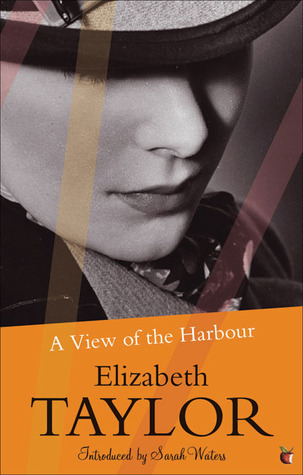
A View of the Harbour by Elizabeth Taylor

Until recently, the only Elizabeth Taylor I'd heard of was the film star with multiple husbands, and therein lies the problem for the overshadowed writer of the same name, according to Sarah Waters in her introduction to A View of the Harbour.


Yet Elizabeth Taylor, the writer, published twelve novels and several collections of short stories from 1945 right into the 1970s and, although since neglected, is today finding recognition as one of the under-valued novelists of the twentieth century. I first became aware of her when her name began to crop up regularly in some of the book blogs I follow and settled on reading her third novel A View of the Harbour.

The story opens with Bertram, an out-of-season visitor to the coastal village of Newby, who thereby casts a fresh perspective on its jaded post-war harbour and inhabitants. Ostensibly, he's there to paint the views but takes much greater delight in insinuating himself into the everyday lives of residents like elegant divorcee Tory Foyle and infirm busybody Mrs Bracey. The viewpoint shifts to other protagonists, as we begin to discover the burgeoning relationship between Tory and Robert, the doctor who lives next door and happens to be the husband of Tory's best and oldest school-friend Beth. A writer immersed in her stories, Beth primarily views real life experiences as material for her books, which leaves her ignorant of what's going on under her nose, unlike her more observant daughter.

Superficially, there may not be all that much happening in this novel, but there's a great deal milling about just beneath the surface, in the little looks and sideways glances, the dynamics of relationships between families and so-called friends. At the beginning, so many characters are introduced in such a short space of time that I found myself confused, particularly as they're all too often peering out of an upstairs window onto the harbour below or going to, or thinking about going to, the pub.

Gradually, the characters take on more rounded, well-defined shapes and, as Taylor inks them in with a wryly expert hand, many develop an inner dialogue at odds to their actions. Mrs Bracey may appear a coarse and demanding invalid with little sympathy for the drudgery she's inflicting on her daughters, but turns out, in struggling with her own mortality, to be a surprisingly complex and intelligent interpreter of the motives of others. And there's a feeling that Taylor is having fun with some of her minor characters, such as Tory's son Teddy and his delightful notes home from boarding school, or the never-named librarian
an old man with an ink-pad and a large oval stamp, with which he conducted a passionate, erratic campaign against slack morals. His censorship was quite personal. Some books he could not read and they remained on the shelves in original bindings and without the necessary stigma 'For Adults Only'. Roderick Random stood thus neglected, and Tristram Shandy, vaguely supposed to be children's books. Jane Eyre, bound and rebound, full of loose leaves, black with grease, fish-smelling, was stamped back and front. Madame Bovary had fallen to pieces.
I loved the readers '...bewildered, misled...' searching for the pornography in Jane Eyre and the librarian's fixed standards where
Murder he allowed but not fornication. Childbirth (especially if the character died of it) but not pregnancy. Love might be supposed to be consummated as long as no one had any pleasure out of it.
Interwoven with Taylor's humour there's a pervading theme of loneliness in this book. Losses sustained in the Second World War are still raw; widowed Lily Wilson now lives with only a ghoulish collection of waxworks of serial killers for company, a seasonal attraction which she opens to visitors in the summer but has to endure every evening as she returns from her lonely bar-side vigil. She of all residents is most flattered by Bertram's attention and let down by his butterfly ways.

Although we never find out the location of Newby (but it's close enough to London for day trips) there's a great sense of place in this novel and of a livelihood slipping away, eclipsed by the new town just around the headland.


As first, I didn't think I was going to enjoy the claustrophobic, small-town atmosphere of this book, with its considerable cast of characters watching and being watched, gossiping and making do. But as I got to grips with their individual personalities, I started to empathise with their dilemmas and revel in the fine writing. Elizabeth Taylor creates nuanced, often humorous, characters but is not afraid to strip them bare and expose their souls. On the basis of A View of the Harbour, she deserves her renewed recognition.


Elizabeth Taylor's A View of the Harbour with an introduction by Sarah Waters is published by Virago Press and is currently available from The Book People  for £4.99 as part of a three book set.